Live With Sondra In Studio
Life-Saving Innovation in Aquatics: Tech, Data & Human Vigilance
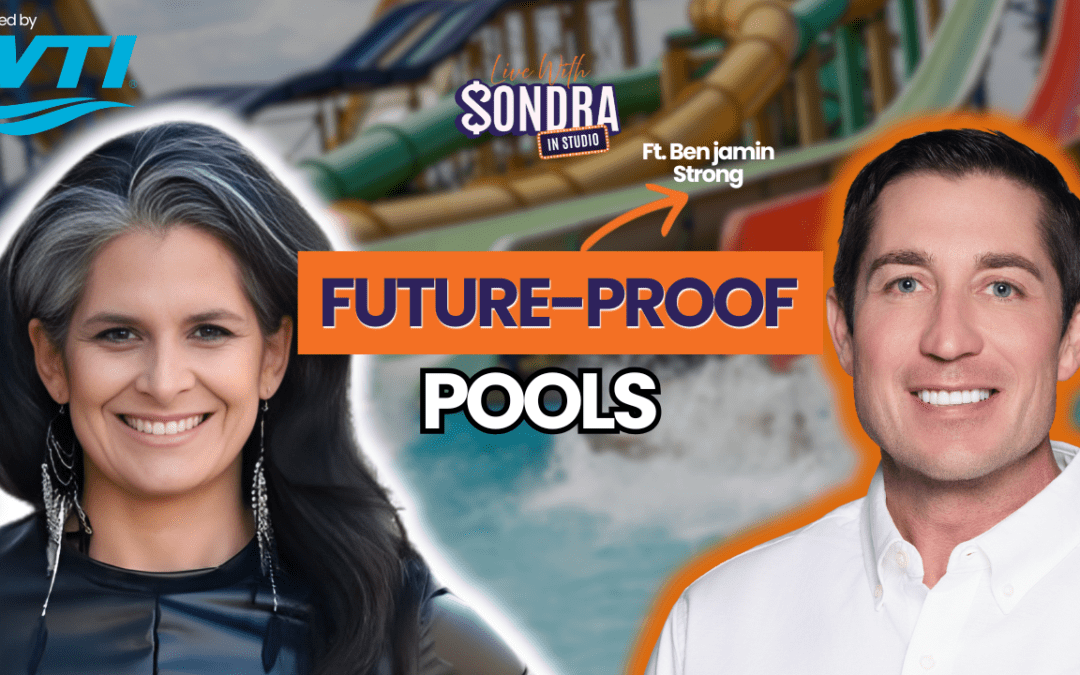
Ft. Benjamin Strong, COO of Ellis Aquatic Innovation & Ellis International
This in-studio episode features Benjamin Strong, COO of Ellis Aquatic Innovation and Ellis International, on how a legacy lifeguard-training brand is reinventing aquatic safety with AI-powered tools, real rescue data, and lifeguard-centered design. Ben shares how the EAV System (Ellis Aquatic Vigilant System) tackles staffing challenges, complex attractions, and tech skepticism—enhancing lifeguards rather than replacing them.
“If you don’t protect the people at your facility, you’re in trouble from the get-go.”
– Ben Strong, on the non–negotiable priority of guest safety
Overview
This conversation between Ben and Sondra is a playbook for operators who are feeling:
- Overwhelmed by staffing gaps and operational friction
- Skeptical of AI and surveillance but curious about real safety gains
- Concerned about incidents, near-misses, and liability in the water
You’ll hear how a 40+ year legacy brand is:
- Using real-world rescue data (25,000+ documented rescues) to rewrite training and protocols
- Building human-in-the-loop safety tech that amplifies lifeguards instead of replacing them
- Turning failures and uncomfortable truths (like sleeping guards and hesitation on stand) into fuel for industry-wide improvement
For aquatic directors, GMs, and safety leaders, this episode is a practical look at what “next-generation safety” actually looks like on deck.
1. From Lifeguard to COO: A Career Built in the Water
Ben’s credibility starts on the stand, not in a boardroom.
- Started as a junior lifeguard at 14 in Indiana, then lifeguard at 15
- Worked his way through almost every role at Ellis: lifeguard, supervisor, manager, aquatic director, instructor, instructor trainer, and beyond
- Has spent ~20 years inside Ellis and the aquatic industry, mentored by some of the founding figures of the modern waterpark world
What comes through:
- This isn’t a “tech founder looking for a use case”; it’s an operator building tools for operators
- The culture of mentorship and high standards at Ellis is a throughline in how they think about safety and innovation
“They set those standards really, really high… and that expectation of zero drownings in the aquatic community… does put a lot of pressure, but it also gives us a good opportunity to realize that there’s always room for improvement.”
Executive takeaway:
Your best innovation lens often comes from people who’ve lived every operational layer—especially when the stakes are life and death.
2. Why Aquatic Safety Has to Evolve Now
The industry has changed—but many safety practices haven’t.
Ben calls out several converging pressures:
- Staffing crises
Parks can’t run all attractions or have to shorten hours because they can’t staff safely. - More complex attractions
From lazy rivers to advanced slides and surf attractions, operational complexity has exploded in 20 years. - Rising expectations
Guests assume near-perfect safety; regulators and communities have zero tolerance for preventable incidents. - Cognitive overload for guards
Hundreds or thousands of guests, unpredictable behavior, heat, fatigue, rule enforcement, parent assumptions (“the lifeguard is watching my kid”).
“The job duty of a lifeguard is so difficult and challenging… it is tireless work. It’s exhausting… and the demands of that job are only increasing.”
Executive takeaway:
If your operations, training, and tools still look like they did 20–30 years ago, you’re not just “behind”—you’re out of alignment with the real risk profile of today’s parks.
3. The EAV System: Tech That Keeps Lifeguards in the Loop
💡 Core idea: Technology as an extra set of eyes, not a replacement.
Ben introduces the EAV System (Ellis Aquatic Vigilant System):
- Uses technology to act as an additional viewpoint over the water
- Designed to assist lifeguards with recognition and response, especially in crowded, chaotic pools
- Focused on:
- Detecting abnormal behavior or distress
- Alerting guards to “pay attention over here” in real time
- Removing seconds of hesitation and uncertainty
Key clarifications Ben makes over and over:
“This isn’t about replacing guards in any way, shape, or form. It’s about how do we utilize technology so that we can operate them the way that we need to… and at the same time, enhance safety.”
“The system does not work without the lifeguard being regularly involved.”
The design is explicitly:
- Human-centered and lifeguard-centered
- Dependent on humans for response, care, and follow-up
- Built to reallocate lifeguard focus and effort, not eliminate roles
Executive takeaway:
If your team is afraid that tech = job loss, reframe it: the winning systems remove cognitive overload, hesitation, and blind spots, so humans can do the work only humans can do.
4. Data, Failures & the Moral Obligation to Learn
📊 One of the most powerful throughlines in this conversation is data + humility.
Ben explains that EAV has recorded and documented:
- 25,000+ real rescues, across:
- All ages, body types, and backgrounds
- Multiple attraction types (lap pools, wave pools, lazy rivers, slides, etc.)
That data now feeds:
- Redesign of training content and curriculum
- Better understanding of:
- What drowning actually looks like (vs. movie stereotypes)
- Real-world timelines of distress, recognition, and response
- Improvements in ride design, guard protocols, and operations
Critically, Ben pushes against the instinct to hide failures:
“Historically, in the past, people wanted to take that failure and box it up and package it and hide it away, and the reality of it is, it really should come to light… so that those problems can be fixed and repaired and prevented into the future.”
And he reframes the ethics of safety tech:
“If you can take the learnings from all of those previous incidents that happen and create a tool or a piece of technology to prevent that, you have a moral obligation to do that.”
Executive takeaway:
In high-stakes environments, data isn’t surveillance—it’s responsibility. You can’t meaningfully reduce risk if you’re not willing to see, measure, and learn from what’s actually happening in your pools.
5. What the System Reveals: Vigilance, Hesitation & Accountability
🎯 With EAV running, parks are discovering things they never would have seen.
Examples Ben shares:
- A lifeguard asleep at the top of a family raft slide, caught on system video.
- Measured 11 seconds of hesitation on average:
- Time between a lifeguard recognizing distress and actually moving.
- Those 10–11 seconds are “life critical moments.”
Beyond catching issues, they’re using the system to:
Build self-accountability by piping metrics and clips back to guards
Gamify vigilance with rewards, metrics, and performance feedback, especially effective for the 16–25 age group
Show guards exactly:
- What real distress looks like
- What happens when they hesitate
- Why instant response matters
“If you don’t show somebody what you are looking for, it makes it really hard for them to identify and then go in and practice.”
Executive takeaway:
The combination of video evidence + performance metrics can transform training from abstract rules into visceral, behavior-changing feedback—for both individuals and whole teams.
6. Overcoming Tech Skepticism & Infrastructure Gaps
⚙️ Ben and Sondra both acknowledge a harsh reality: many parks are drowning in outdated processes and fragile tech.
Challenges they highlight:
- Operators worry that new systems will add work, not remove it.
- Many facilities were never wired or architected for modern, connected systems.
- There’s confusion and sometimes vaporware in the market:
- Vendors promising “drowning detection” without real, verifiable capabilities.
- Early external tech partners didn’t understand aquatic realities:
- No tolerance for latency, lag, pixelation when seconds matter
- Complex variables like glare, turbidity, theming, crowding
Ellis’ pivot:
- They brought development in-house:
- Learned networking, fiber, AI, video, infrastructure themselves
- Kept a few expert partners but owned the core understanding
- They promote radical transparency in sales:
- Encourage prospects to visit live parks using EAV
- Let operators talk to existing clients without Ellis in the room
“Any entity that doesn’t invite you over to see a system within an active park and allow you feedback from the park directly without their involvement, I would question.”
Executive takeaway:
When evaluating mission-critical tech, insist on proof in live environments—and expect vendors to be open to scrutiny, site visits, and operator-to-operator conversations.
7. Embracing Change Before It’s Too Late
🔁 The episode closes on a clear message: change is non-negotiable.
Ben’s advice to parks that are overwhelmed or behind:
“Don’t be afraid of change. Welcome change because it’s the only way to improve for the better. And don’t be afraid to try something new.”
And the warning:
- Facilities that refuse to evolve—operationally, technically, and culturally—
are already: - Struggling to staff
- Cutting hours
- Or closing entirely
“The industry is changing whether they want it to or not. So you got to get on board at some point.”
Sondra ties it to a broader leadership principle:
- Comfort is a dream killer.
- In attractions, staying comfortable doesn’t just cost growth; it can compromise safety, trust, and survival.
Executive takeaway:
If your operation feels “fine,” that’s your signal to inspect harder, not relax. The next decade will reward operators who intentionally evolve safety, tech, and guest experience together.
Watch & Listen on the Go!
Listen to Live with Sondra In Studio on your favorite platforms including: LinkedIn, YouTube, Instagram, TikTok and X!

In-Studio Series Partner: Water Technology, Inc. (WTI)
Standout experiences don’t happen by accident. They’re designed that way. So if you’re serious about building something people talk about, film, and come back to, go to WTIWorld.com and see what Water Technology, Inc. is doing around the world. Be a destination.
#YourWorldinWater
Recent Posts
Attraction Tech: Gamify Your Venue with Smart Systems
Attraction Tech: Gamify Your Venue with Smart Systems In this episode of Live with Sondra, Arash...
Park Gamification: Immersive FEC Missions for Guest Engagement
Park Gamification: Immersive FEC Missions for Guest Engagement Ben Griffith, CEO of PlayMAXX, is...

Attraction Networking: Building the Global Deals Behind the Rides
Attraction Networking: Building the Global Deals Behind the Rides Emily Popovich, Director of...