
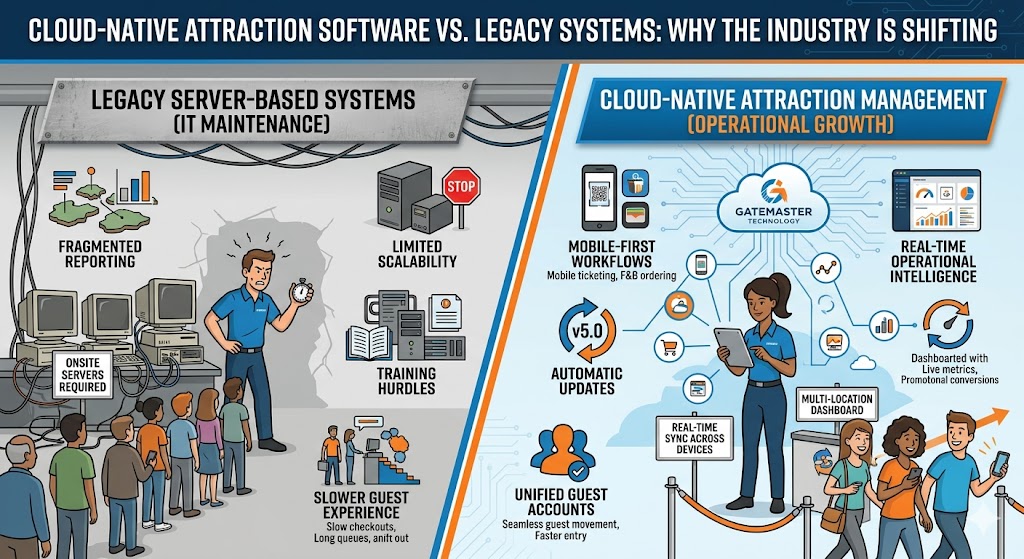
Cloud-Native Attraction Software vs. Legacy Systems: Why the Industry is Shifting
The attractions industry has changed dramatically over the last decade. Today’s guests arrive with a smartphone in hand and a specific set of expectations. They want mobile ticketing and food ordering, faster entry, digital waivers, Apple and Google Wallet integration, and instant online purchases.
But while guest expectations have skyrocketed, many attractions are still operating on software infrastructure built for a completely different era.
For years, onsite server-based systems were considered standard. Operators installed hardware onsite, maintained local servers, manually managed updates, and often relied on disconnected software across departments. At the time, it worked. Today, that model creates operational bottlenecks that directly impact your revenue, guest satisfaction, and scalability.
The transition to cloud-native attraction management is no longer just a “tech upgrade”—it’s a competitive advantage.
What Is Cloud-Native Attraction Software?
Cloud-native software isn’t just a traditional program hosted on the web; it is built from the ground up to thrive in a connected, mobile world. Unlike legacy systems tied to a physical server in your office, cloud-native platforms support:
- Real-time synchronization across all devices.
- Multi-location operations managed from one dashboard.
- Mobile-first workflows for food, retail, and admissions.
- Automatic updates so you’re never running “v1.0” while the world is on “v5.0.”
The biggest difference is flexibility. Legacy systems were designed for fixed workstations. Modern attractions operate everywhere—from cabanas and self-service kiosks to group sales and mobile food and beverage ordering.
The Hidden Costs of Legacy Server-Based Systems
Many operators stick with older systems because “they still work.” But underneath the surface, these systems often leak profit through hidden operational costs.
1. Fragmented Reporting
When ticketing, POS, food service, memberships, and eCommerce operate on separate “islands,” management teams struggle to trust their numbers. Revenue reconciliation becomes a manual, grueling task, and departments operate in silos instead of collaborating.
2. Limited Scalability
Want to add a new gate, a seasonal self-service kiosk, or a mobile ordering station? With legacy systems, this often requires expensive hardware upgrades and heavy IT involvement. Cloud-native systems scale instantly as your footprint expands.
3. Training Hurdles for Seasonal Staff
Attractions rely on seasonal labor. If your gate staff uses one system, retail uses another, and food service uses a third, training becomes slow and expensive. Unified cloud platforms provide a consistent interface, making cross-training simple.
4. Slower Guest Experiences
Modern guests compare your venue to the convenience of Amazon, Disney, and Starbucks. Legacy infrastructure leads to:
- Slow checkouts and delayed ticket delivery.
- Long lines for pass processing.
- Outdated, paper-heavy waiver workflows.
- System slowdowns during peak attendance periods.
Real-Time Data: Your Best Management Tool
Modern operators need answers now, not tomorrow morning. Cloud-native systems provide real-time operational intelligence to answer critical questions instantly:
- How much revenue have we done in the last hour?
- Which promotions are actually converting right now?
- How many guests are currently inside the park?
- Which departments are underperforming today?
The Shift: By moving to the cloud, you shift from IT Maintenance (backups, server crashes, manual updates) to Operational Growth (improving guest experience and driving revenue).
Choosing the Right Path Forward
Not all cloud systems are created equal. When evaluating your next move, look beyond the “buy” button. Focus on:
- Robust RFID and Access Control: Does it integrate seamlessly?
- CRM and Guest Accounts: Can you track a single guest’s journey across all departments?
- Support Responsiveness: Is the team there when you’re at peak capacity?
The Future of Attraction Operations
The industry is moving toward a mobile-first, connected ecosystem. Operators who cling to aging, disconnected infrastructure will struggle to meet the frictionless experience guests now demand.
The shift to cloud-native software isn’t just a trend—it’s the foundation for faster operations, better reporting, and scalable long-term growth.