Live With Sondra In Studio
Never Split the Difference: Chris Voss on Negotiation, Trust & Doing Cool Stuff With Cool People
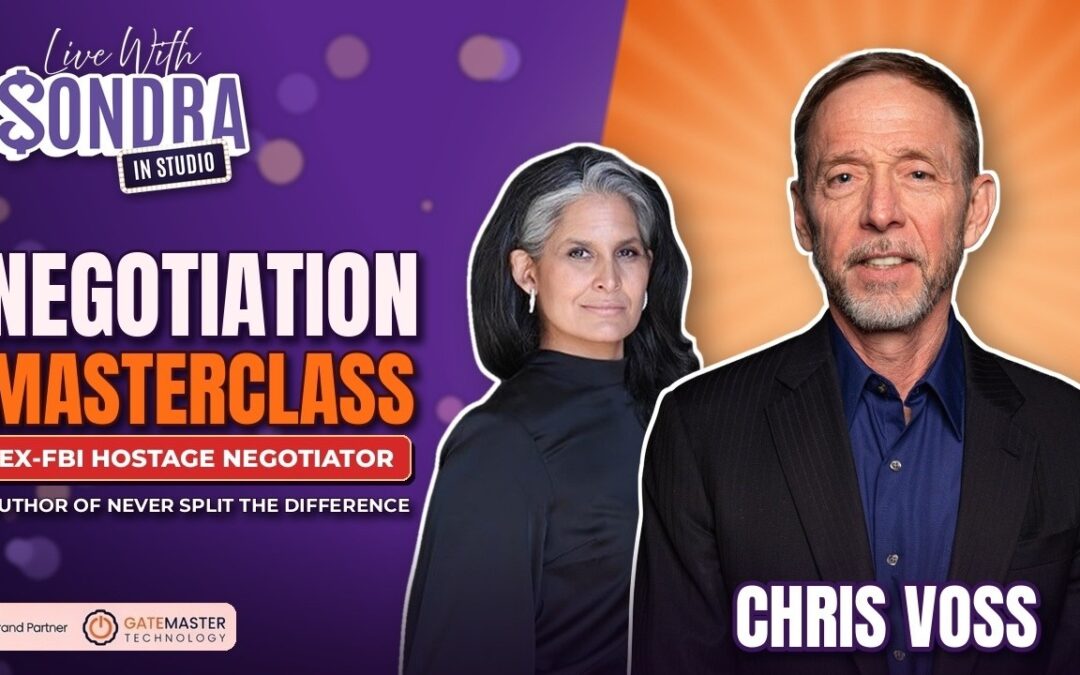
Chris Voss, former FBI Lead International Kidnapping Negotiator & author of Never Split the Difference
This in-studio episode—recorded on location at the WWA (World Waterpark Association) convention—features Chris Voss, the FBI’s former lead international kidnapping negotiator and author of Never Split the Difference, the #1 selling business book on Amazon for ten years running. Chris sits down with Sondra to translate hostage negotiation tactics into the everyday deals that keep attractions, waterparks, and vendor partnerships running. Along the way, he makes the case that collaboration—not coercion, not cutthroat tactics, not chasing “yes”—is what actually drives long-term profit.
“A great deal is properly blending what we have, and that blend is never 50/50.”
— Chris Voss, on why the best deals aren’t compromises
Overview
This conversation between Chris and Sondra is for operators, vendors, and leaders who are:
- Negotiating deals where the relationship has to last 20+ years
- Frustrated by deals that die after signing—the “agreement graveyard”
- Wondering why their team resists change even when the new system is clearly better
- Looking for negotiation tools that build trust instead of burning bridges
You’ll hear how FBI hostage negotiation maps directly onto business:
- Why chasing “yes” gets you bamboozled—and how flipping to “no-oriented questions” changes everything
- The one line Sondra says changed her business life: “I’m not sure how I’m supposed to do that”
- How understanding the other side’s challenges builds more trust than any pitch ever could
- Why the “decision-maker” is a myth—and how pronouns tell you who you’re really dealing with
1. From Hostages to Handshakes: An FBI Negotiator Goes to Business
Chris’s credibility starts in the most high-stakes negotiating rooms imaginable.
- Served as the FBI’s lead international kidnapping negotiator—handling both domestic (sell-side) and international (buy-side) cases
- Domestic hostage negotiation is like a cold call from a salesman: you’re selling jail time to someone who doesn’t want to buy
- International kidnapping is buy-side: negotiating to get someone’s loved one back for the best possible price—because families will give everything, and you can’t let them be victimized twice
- While at the FBI, began collaborating with Harvard Law School, who told him the dynamics of human interaction are identical—just different stakes
- Founded The Black Swan Group after leaving the FBI, coaching businesses on collaborative negotiation
“I always suspected that hostage negotiation was just emotional intelligence applied to tough situations. And they said, ‘Yeah, it is.'”
Executive takeaway: The skills that work in life-or-death hostage situations work in your boardroom. The stakes are different, but human dynamics are the same.
2. Stop Chasing Yes: Why Most Yeses Are Counterfeit
One of the most counterintuitive ideas Chris shares: get out of the “yes” business entirely.
- People who are after “yes” love hearing it—but the vast majority of yeses are counterfeit
- Someone says yes to pull information out of you, then ghosts you after they’ve got what they need
- The fix: flip your questions. Instead of “Does this look like something you would like?” try “Is this a bad idea? Is this ridiculous? Am I on drugs?”
- People feel safe and protected when they say no—so give them permission to say it
“People feel safe and protected when they say no. So the whole idea is it’s not so much what I say, but how you feel.”
Executive takeaway: If you want a real answer, stop asking for agreement. Start asking questions that let the other side feel in control—and watch them open up.
3. The One Line That Changes Everything
Sondra shares that a single phrase from Never Split the Difference reshaped how she does business: “I’m not sure how I’m supposed to do that.”
- It tells the other side this probably isn’t going to happen—without making them feel attacked
- It shifts the pressure off them and invites collaboration to solve the problem
- If they don’t pick up the invitation, you’ve still signaled you won’t just cave
- Chris calls this being the “irresistible force and the immovable object”—curiosity draws them in, and this line holds your ground without inflaming the situation
“Irresistible force, curiosity’s irresistible. True charm is being completely interested in you. Interesting people are interested.”
Executive takeaway: You can be firm and collaborative at the same time. The right words let you hold your position while keeping the relationship intact.
4. The Agreement Graveyard: Why Deals Die After Signing
Chris and Sondra dig into one of the most frustrating dynamics in business: you shake hands, you think you have a deal, and then it vanishes.
- There’s always a team on the other side, and if they weren’t involved in how the deal was made, they’ll drag their feet on implementation—or kill it entirely
- Chris’s fix: ask questions that make your counterpart think about their own team—“How hard is it gonna be to get buy-in from your team? What are you gonna say when they push back?”
- It doesn’t matter how they answer. What matters is the seed you planted—they’ll remember it that night and check in with their team before it’s too late
- People are much better at handling change if they know it’s coming
“You come to agreement across the table and you think you got a deal, and they take it back to their side, and it goes into the graveyard.”
Executive takeaway: A deal isn’t done when the person across from you says yes. It’s done when their team is ready to implement. Prep for that from the first conversation.
5. The “Decision-Maker” Is a Myth
Chris dismantles one of the most persistent beliefs in B2B sales: that you need to “get to the decision-maker.”
- If only one person is deciding on the other side, that means they have a weak team—and you can’t go far with a weak team
- Listen for pronouns: people who use “I, me, my” are at best a source of information. People who use “we, us, our” understand that business is a team game
- Deal killers exist on every side—in-house counsel, terms-and-conditions teams, department heads who weren’t consulted
-
- Ask about them: “What’s your in-house counsel feel about this? How tough’s it gonna be to get past them?”
“You wanna go fast, go alone. You wanna go far, go as a team. I wanna deal with somebody who’s got a team that’s gonna go far.”
Executive takeaway: Stop chasing the mythical solo decision-maker. Find the people who speak in plurals, and you’ve found partners who can actually deliver.
6. If You’re Explaining, You’re Losing
Chris and Sondra unpack the difference between telling the truth and telling your point of view.
- “If you’re explaining, you’re losing”—originally Reagan, but Chris applies it to negotiation
- Your counterpart doesn’t need to know your life story. They need to know you understand what they’re up against
- Outline their challenges—warts and all, elephant in the room—and their next thought is: “If you understand the challenges, you must know the answers”
- You don’t have to give them the answers. Understanding alone builds massive trust
“Do you understand what I’m up against? Not, do you understand me? Not, do you know if my kids played Little League? Do you understand my challenges?”
Executive takeaway: The fastest way to build trust isn’t to sell harder. It’s to show you see the world from their side of the table—problems included.
7. Great Deals Aren’t 50/50
Chris closes with a reframe on what a “fair” deal actually looks like.
- Steel is 2% coal and 98% iron. Nobody complains that coal only got 2%. They made something neither could make alone
- A great deal is properly blending what each side brings—and the blend is never 50/50
- If the other side gave you something you never would have had without them, you’ve got to appreciate that—even if their contribution was small in percentage terms
- Chris shares his own handshake deal with collaborator Nick Nanton: 50/50 split, no operating agreement, built on years of trust—a deal structure that a Hollywood company literally couldn’t believe was real
“You can’t say, ‘You guys only get 2% of the profit,’ because you only created 2% of the $100 million that I wouldn’t have without you.”
Executive takeaway: Stop splitting the difference. Start blending what each side brings. The goal isn’t meeting in the middle—it’s creating something neither of you could build alone.
Watch & Listen on the Go!
Listen to Live with Sondra In Studio on your favorite platforms including: LinkedIn, YouTube, Instagram, TikTok and X!
In-Studio Series Partner: Gatemaster Technology
This episode is brought to you by Gatemaster Technology, the operating system for attractions.

Episode Transcript
Chapter 1: Cold Open: Never Split the Difference
0:00
0 seconds
A great deal is properly blending what we have. And that blend is never 5050.
0:10
10 seconds
And so if the other side gave you a small amount, but it gave you something you never would have had without them,
0:18
18 seconds
you’ve got to appreciate that. You can’t say, “Well, yeah, you guys only get 2% of the profit because you only created 2% of the
0:26
26 seconds
hund00 million that I wouldn’t have without you.” You know, it’s their next thought is if you understand the challenges, you must know the answers.
0:37
37 seconds
You don’t have to give them the answers. Understand what they’re up against.
0:43
43 seconds
Now, they have a massive amount of faith in your ability to help them navigate that landscape. Yeah, that’s fascinating.
0:50
50 seconds
Yeah. People are who are after Yes. You love hearing yes. And you really don’t understand the vast majority of yeses are counterfeit. somebody’s saying yes
0:58
58 seconds
to you just because they’re looking to get it pull you information out of you.
1:01
1 minute, 1 second
They want to learn as much as possible from you.
Chapter 2: Welcome: Meet Chris Voss
1:16
1 minute, 16 seconds
Well, Chris, welcome to Live with Sandra. I’m happy to be here.
1:20
1 minute, 20 seconds
Appreciate you being here. We were talking earlier about us being here for the World Water Park Association show and how we have waterpark operators from
1:29
1 minute, 29 seconds
all over the world visiting. And I know uh I appreciate you being here because I know some of the things that a lot of our operators are up against are those
1:37
1 minute, 37 seconds
human conversations and negotiations that happen both with teams, vendors, I would say even the general public
1:46
1 minute, 46 seconds
sometimes we’re having to negotiate with them. And I was really hoping that just so our audience understands a little bit
1:55
1 minute, 55 seconds
about who you are if they don’t already know and how they don’t I don’t know.
1:59
1 minute, 59 seconds
But can you tell us a little bit about how you got it started in business and negotiation?
2:05
2 minutes, 5 seconds
Sure. Yeah. Uh I was I was the FBI’s lead international kidnapping negotiator and then be as in a full-time
Chapter 3: From the FBI to Business Negotiation
2:14
2 minutes, 14 seconds
negotiation job with the FBI. you get involved in both domestic and international cases. Now, what’s the difference? Um, a domestic hostage
2:23
2 minutes, 23 seconds
taking from law enforcement’s perspective is sellside negotiations.
2:28
2 minutes, 28 seconds
Uh, you got somebody trapped someplace, you’re going to call in, you’re going to talk to them on a phone. It’s a cold call from a cold calling salesman. You
2:35
2 minutes, 35 seconds
get a cold call from a salesman, a phone rings, you don’t really want to talk to that person. Yeah.
2:40
2 minutes, 40 seconds
And you probably don’t want to buy what they’re selling.
2:44
2 minutes, 44 seconds
domestic US hostage negotiators selling jail time of all things. And you’re not going to get it by coercing them. You
2:51
2 minutes, 51 seconds
don’t get deals by coercing people. You know, having a SWAT team on the outside that is that isn’t going to force
2:58
2 minutes, 58 seconds
anybody into a deal. Um it’s actually going to cause a lot of deals to go bad. Force causes deals to go bad. All right.
Chapter 4: Why Force Causes Deals to Go Bad
3:06
3 minutes, 6 seconds
So that’s domestic US sell side. Kidnappings are worked internationally. It’s buy side.
3:12
3 minutes, 12 seconds
The heartless nature of the business is it’s a commodities business. You have to understand what it is to the other side in all negotiations.
3:23
3 minutes, 23 seconds
Um the most dangerous negotiation is where you think you know what the other side wants. You walk in with blinders on.
3:32
3 minutes, 32 seconds
Bad guys got a commodity. They want to sell it to a bidder.
3:36
3 minutes, 36 seconds
There’s usually only one bidder, but it’s a it’s buy side. you call to negotiate on behalf of the family. You
3:44
3 minutes, 44 seconds
got to get that person out, as stupid as it sounds, for the best possible price. Now, why do you got to do that?
3:52
3 minutes, 52 seconds
Because you don’t want the family to be victimized twice. They’ll give every last dime they can to save their loved one. Yeah.
3:58
3 minutes, 58 seconds
Then they then then they’re pillaged twice.
4:02
4 minutes, 2 seconds
Anyway, uh that was my career with the FBI. While I was doing it, I started collaborating with guys at Harvard Law School. They were gracious enough to
4:11
4 minutes, 11 seconds
invite me to come and attend one of their classes as a student and uh they said you’re doing the same
4:19
4 minutes, 19 seconds
thing we are. The dynamics are all the same. The stakes are different but the dynamics of human interaction and I always suspected that hostage
4:27
4 minutes, 27 seconds
negotiation was just emotional intelligence applied to tough situations and they said yeah it is. As
4:35
4 minutes, 35 seconds
a matter of fact, there were some things we were doing that was along the same lines but was more advanced than what they were doing. So then after I uh left
4:45
4 minutes, 45 seconds
the FBI, I hate the word retired. I didn’t retire. You know, retirement is an email to the universe to pick up the body. You got to keep going. You got to
4:53
4 minutes, 53 seconds
do more stuff. Um I started my coaching and training company in business negotiation, strictly business, no security anymore.
5:03
5 minutes, 3 seconds
And we have a very robust operation. I wrote a book called Never Split the Difference.
Chapter 5: Never Split the Difference
5:09
5 minutes, 9 seconds
Never Split the Hostage. Never Split the Difference.
5:13
5 minutes, 13 seconds
And it’s been the number one selling business book on Amazon for 10 years.
5:19
5 minutes, 19 seconds
Wow. Well, that’s how I I learned about you was was reading the book. And there’s a couple of things that I found
5:26
5 minutes, 26 seconds
to be really interesting. And I thank you for sharing all of that with with us because
5:32
5 minutes, 32 seconds
I know the story from reading your book and listening to to interviews, but I and I recommend you all the time because
5:41
5 minutes, 41 seconds
it has made such a big difference in my business and my life and why I’m thrilled that you’re here with me today.
5:47
5 minutes, 47 seconds
One of the things that I really loved and what’s and and hopefully I’m okay to spoil what’s in the book, but yeah. Well, I live at the end.
5:58
5 minutes, 58 seconds
You’re not spoiling it.
6:00
6 minutes
But there is this there’s this saying that you say that has completely changed my life and my sister who’s my business
6:07
6 minutes, 7 seconds
partner. The uh I’m not sure how I’m supposed to do that, right?
6:12
6 minutes, 12 seconds
And that one line has completely changed everything in how we do business. And I think sometimes we
6:21
6 minutes, 21 seconds
were having a conversation earlier today about how sometimes it’s hard for women in negotiation, right? Especially coming from an industry when I started with my
6:29
6 minutes, 29 seconds
company, I was the youngest and only woman on the team. And so I had to learn how to navigate that with with them. But
6:36
6 minutes, 36 seconds
one of the things that I often say is I don’t think that’s a male or female issue. I just think a lot of what men have learned in business, they’ve been
6:44
6 minutes, 44 seconds
doing a little bit longer. So, we’re we are maybe the second generation of women who have been doing business like this.
6:52
6 minutes, 52 seconds
But I just thought that that book was such a great tool for women who find themselves in sales, in negotiations,
7:00
7 minutes
dealing with hostile, you know, we were having a conversation earlier with another guest about how you go in on
7:07
7 minutes, 7 seconds
some of these deals and it’s millions of dollars on the line and something’s going wrong and you still have to negotiate.
7:14
7 minutes, 14 seconds
Yeah. Yeah. Yeah. How do you navigate that, you know? Yeah.
7:18
7 minutes, 18 seconds
Preserve the relationship, maybe even strengthen it by how you approach it. Well, I I think you’re right about that. I hope so.
7:25
7 minutes, 25 seconds
In terms of the relationship, pretty good.
7:27
7 minutes, 27 seconds
Well, you know what? I another thing that I was curious about because I know you say like don’t chase and I might not be saying it the right way, but you’re not chasing the yes.
Chapter 6: Stop Chasing Yes
7:37
7 minutes, 37 seconds
You get out of the yes business entirely, actually. Yeah.
7:40
7 minutes, 40 seconds
Yeah. People are who are after yes. You love hearing yes. and you really don’t understand. The vast majority of yeses are counterfeit. Somebody’s saying yes
7:49
7 minutes, 49 seconds
to you just because they’re looking to get it pull information out of you. They want to learn as much as possible from you. They start yesing you and people get suckered by that. They get happy
7:57
7 minutes, 57 seconds
ears. I heard yes. We must be getting a deal. And then shortly thereafter, they’re ghosted after they’ve given up all their printed information. So,
8:06
8 minutes, 6 seconds
there’s all these problems. And if you just if you just flip the questions, it seems impossible
8:15
8 minutes, 15 seconds
if you say, “Do you disagree?” instead of, “Do you agree?” Or instead of saying, “Does this look like something
8:22
8 minutes, 22 seconds
you would like?” you say, “Is this a bad idea? Is this crazy? Is this ridiculous?
Chapter 7: Questions That Make “No” Feel Safe
8:28
8 minutes, 28 seconds
Am I on drugs?” Um, you get people to say no. People feel safe and protected when they say no.
8:36
8 minutes, 36 seconds
So the whole idea is it’s not so much how I what I say but how you feel.
8:43
8 minutes, 43 seconds
So if I fail to accept your proposal while simultaneously making you feel
8:51
8 minutes, 51 seconds
safe and protected, well the chances that we’ll figure out a proposal is much higher. So, I’m going
8:58
8 minutes, 58 seconds
to do everything I can every step of the way to make you feel not attacked, not coerced, like you were part of the
9:06
9 minutes, 6 seconds
solution, because I’m going to need you to also want to be part of the implementation. There is no solution without implementation.
9:13
9 minutes, 13 seconds
Yeah. Well, you know what I what I really find interesting about the about about all of that asking those
9:21
9 minutes, 21 seconds
questions and even I think I saw something maybe it was one of your last interviews where you’re talking about uh not a lot of people don’t want to be
9:29
9 minutes, 29 seconds
seen as being weak right but that actually could be a strength and in in some ways if you’re asking
9:36
9 minutes, 36 seconds
those questions like you said am I on drugs for having this idea right yeah well it’s a wild you know what are the synonyms is is
9:44
9 minutes, 44 seconds
being vulnerable, being weak, you know, I don’t know. Um, expressing the problems that you’re faced with, is that
9:51
9 minutes, 51 seconds
being weak? Being weak is, you know, being a pushover, being pushed around, you know, agreeing to anything you say just cuz I’m scared of what happens if I don’t agree.
10:00
10 minutes
You know, that’s a bad idea. But we counsel in a really interesting way. We teach people how to be the irresistible force and the immovable object without
Chapter 8: Irresistible Force, Immovable Object
10:08
10 minutes, 8 seconds
inflaming the situation without making the other side feel attacked. Irresistible force. Curiosity is irresistible.
10:16
10 minutes, 16 seconds
Yeah.
10:17
10 minutes, 17 seconds
If I’m deeply curious about you, you’re going to open up. You’re going to tell me tons of stuff. That’s what being is
10:25
10 minutes, 25 seconds
irresistible force is. Charm. True charm is being completely interested in you. Interesting people are interested.
10:33
10 minutes, 33 seconds
That’s irresistible. Not in a movable object.
10:38
10 minutes, 38 seconds
I don’t know how I’m supposed to do that. That’s telling the other side this probably ain’t gonna happen, but in a way that they don’t feel attacked by.
10:48
10 minutes, 48 seconds
You know, you shifted it off them. They don’t feel cornered. It’s a way to it’s a way to tell somebody you’re not going to do something. Yeah.
10:54
10 minutes, 54 seconds
That’s irresistible force, immovable object.
10:57
10 minutes, 57 seconds
I mean, I’ve seen it work as far as that goes because I’ we’ve had, you know, Sometimes I hate being called this but
11:05
11 minutes, 5 seconds
and we’re we’re in an industry where we have some pretty sophisticated caries over the years. So they’re still learning the second generation.
11:14
11 minutes, 14 seconds
All right. I like it.
11:14
11 minutes, 14 seconds
That’s what we call ourselves sometimes in the in the amusement industry or we used to. And what’s interesting is, you know, you’re still dealing with people
11:23
11 minutes, 23 seconds
and families. You know, there’s a lot of families in this industry that are running their businesses and in some cases running them scared.
11:31
11 minutes, 31 seconds
Yeah. And I have found that I’m not sure how I’m supposed to do that really
11:37
11 minutes, 37 seconds
allowed them to relax and help us figure out how we were going to help them
11:44
11 minutes, 44 seconds
through whatever this situation is because we we many of our clients are long-term partners. We’ve I have some that have been with me for 30 years before I was even with the company.
11:54
11 minutes, 54 seconds
Wow.
11:55
11 minutes, 55 seconds
Yeah. And so you see them go through the ups and downs in their businesses and and as one of their vendors or somebody
12:02
12 minutes, 2 seconds
who supports these attractions when it gets hard, you know, it gets stressful for them. And you you see that in how they’re negotiating with you.
12:11
12 minutes, 11 seconds
Yeah. Yeah. Yeah. Well, and that statement in of itself, it’s about building collaboration. Yes.
12:17
12 minutes, 17 seconds
You know, you you you didn’t reject them.
12:21
12 minutes, 21 seconds
You let them know that the proposal as offered is a problematic and then you’re inviting collaboration
12:30
12 minutes, 30 seconds
to solve it. And you’re also if they don’t pick up the invitation, that doesn’t mean you’re going to give in either. Yeah.
12:38
12 minutes, 38 seconds
You’ve already let them know that there’s pretty good chance if you don’t collaborate with me that I’m not going to accept it. Yeah. And none of those are attacking.
12:46
12 minutes, 46 seconds
Well, and I also think like business should be about collaboration. So, it creates that spirit of collaboration
12:53
12 minutes, 53 seconds
if the other side doesn’t believe that you’re trying to trick them, that you’re genuinely interested in what they need and want.
13:01
13 minutes, 1 second
Yep. Yeah. Well, collaboration long term is always significantly more profitable.
13:08
13 minutes, 8 seconds
Now, you always you don’t always see that short term. Like we’ve got a guy, gentleman named Ray, brilliant dude. He’s given us insights.
13:16
13 minutes, 16 seconds
He said, “I’ve made more money you when you guys taught me to collaborate than I ever made being cutthroat, and I made a
13:24
13 minutes, 24 seconds
lot of money being cutthroat.” So, he knew he made a lot of money, but he found this and he made more and he’s happier.
13:32
13 minutes, 32 seconds
So, yeah, we should be collaborative.
13:35
13 minutes, 35 seconds
We’ll make more money being collaborative. You make fewer enemies being collaborative.
13:41
13 minutes, 41 seconds
Just in the short term, it doesn’t always seem that way. Some people try to take you hostage or some people are scared to death because of the circumstances.
13:49
13 minutes, 49 seconds
Yeah, that’s that’s fair. And that’s actually been my experience is since we’ve taken this more collaborative approach. And I think like early, you
13:57
13 minutes, 57 seconds
know, I mentioned I was the youngest only woman on the team. I thought I had to be like the guys and they were always very cutthroat. Yeah.
14:03
14 minutes, 3 seconds
And competitive and even, you know, I I would say that many customers can see past when you don’t
14:12
14 minutes, 12 seconds
truly care about the work that they need done from you. And having tools like this allows them to
14:20
14 minutes, 20 seconds
know that you you do want to see them succeed at what they’re doing. And for us, we do at Gate Master, we do
14:28
14 minutes, 28 seconds
ticketing uh for theme parks and water parks. And despite what they’re paying us, it could cost some of these parks
14:36
14 minutes, 36 seconds
millions of dollars to move their entire teams over. So there’s when we’re negotiating deals for our company,
14:44
14 minutes, 44 seconds
oftentimes we’re having to get buyin from all these departments, from their teams. And that buyin also says, “Well, now you’ve got to put your team through
14:51
14 minutes, 51 seconds
all this training.” And sometimes they don’t like that, right? So you have to you do have to figure out the spirit of
14:58
14 minutes, 58 seconds
collaboration because they’re going to pay us for the system, but at the same time they’re going to invest so much into their team to be able to do it. And
15:06
15 minutes, 6 seconds
I found that those negotiations are very difficult because people aren’t always um trying to think of the right word to
15:16
15 minutes, 16 seconds
say, they’re not always aware of the bigger scope of the project, right? Yes. which makes it sometimes hard to negotiate with them.
15:24
15 minutes, 24 seconds
Yes.
15:25
15 minutes, 25 seconds
So I’m curious how you would handle something like that.
15:29
15 minutes, 29 seconds
Yeah. It’s a dynamic that actually we’ve identified as the agreement graveyard.
Chapter 9: The Agreement Graveyard
15:34
15 minutes, 34 seconds
Um an idea that there’s always a team on the other side and there are a lot of people going to be involved in implementation
15:41
15 minutes, 41 seconds
and if they’re not involved in how the deal was made, they’re going to really drag their feet on implementation if not
15:48
15 minutes, 48 seconds
get in the way entirely. Yeah, that’s where you come to agreement across the table and you think you got a deal and they take it back to their side and it goes into the graveyard. How do
15:57
15 minutes, 57 seconds
you keep it from going into the graveyard?
15:59
15 minutes, 59 seconds
So, what we try to do is we teach people how to make your counterpart aware of this because counterparts sometimes they think their whole team’s got buy in and
16:07
16 minutes, 7 seconds
it’s easy to understand why they would think that. But we’ll say in a negotiation say to them, what are you going to say when you take this back to the other side and somebody pushes back?
16:19
16 minutes, 19 seconds
I mean, h how you how are you going to defend this?
16:23
16 minutes, 23 seconds
What are what do the people what kind of problems did they have in the past? How did this break down in the past? You you’re making them think about their
16:31
16 minutes, 31 seconds
team, even though they already thought they did. You’re making them think about it again. Now, the issue isn’t how they answer your question.
16:42
16 minutes, 42 seconds
The issue is that you planted a seed in their brain.
16:46
16 minutes, 46 seconds
and they’re more than likely say, “Ah, they’re going to be fine. You know, we’ve worked through this.” But they’re going to get home that night and they’re going to remember that question. They’re
16:54
16 minutes, 54 seconds
going to think, “Maybe I need to check.” And just checking in brings those teams along
17:03
17 minutes, 3 seconds
quicker because then they weren’t suddenly here’s the new ticketing system. Yeah.
17:09
17 minutes, 9 seconds
You know, like like it or not, this is it. And they’re like, “We got no warning here.” if they were least clued in when
17:17
17 minutes, 17 seconds
the process started. People are much better at handling change if they know it’s coming. You know, the door opens and change is suddenly there. You’re
17:25
17 minutes, 25 seconds
like, you know, why the hell wasn’t I told? You know, I I have something to say about this. I got to live with this. Yeah.
17:32
17 minutes, 32 seconds
So, we teach people to draw the have draw their whole team in early. We don’t say that. We say, you know, what what are you going to say when when they push
Chapter 10: How Hard Is Buy-In Going to Be?
17:40
17 minutes, 40 seconds
back? Or another really good one is how hard is it going to be to get buy in from your team?
17:48
17 minutes, 48 seconds
It makes them think about it. It makes them expect the challenge in advance.
17:55
17 minutes, 55 seconds
A friend of mine went to get tickets to uh and he’s one of our negotiation coaches now, Jonathan Smith. He’s got a book out now with
18:04
18 minutes, 4 seconds
another one of my coaches. Fight less win more is the book. It’s a great supplement to never split the difference. Jonathan is also our EOS
18:11
18 minutes, 11 seconds
coach. That’s the way we operate this company system, entrepreneurial operating system.
18:16
18 minutes, 16 seconds
So Jonathan’s trying to get tickets to the Trump inauguration. And he goes to somebody who knows has connections and he says, “How hard is it going to be to
18:25
18 minutes, 25 seconds
get tickets?” And I’m like, “Ah, it’s not going to be a problem at all.” But what he’s done is he’s alerted them to be prepared for problems.
18:32
18 minutes, 32 seconds
Yeah.
18:34
18 minutes, 34 seconds
Not can you get me tickets? you know, the yesoriented thing because they don’t think about implementation.
18:41
18 minutes, 41 seconds
They get back to them and they say, “It was hard.
18:45
18 minutes, 45 seconds
Here are the tickets.” Now, had he not prepped them in advance, can you give me some tickets? Sure, no problem. They
18:53
18 minutes, 53 seconds
think it’s going to be no problem. They run into problems and they’re like, “Ah, I tried.” And they’ have got back to Jonathan and said, “We tried. We
19:01
19 minutes, 1 second
couldn’t do it.” But by planting that seed in advance, making them aware of difficulties to come. They imagine themselves persevering.
19:11
19 minutes, 11 seconds
How hard is it going to be? It’s not going to be hard. Well, they they run into problems. They go like, I said it
19:18
19 minutes, 18 seconds
wasn’t going to be hard. You know, I already bet on me. Yeah.
19:22
19 minutes, 22 seconds
I got to persevere. And these are the conversations you can have at the table to prep the people for the problems that
19:30
19 minutes, 30 seconds
they’re going to run into on their side of the table.
19:33
19 minutes, 33 seconds
Yeah. No, I love this. I love it because not only does it prep them, but I could also see where it lets them understand
19:41
19 minutes, 41 seconds
the expertise that you have. Because in this case, it is going to be hard to have to, you know, we a lot of our parks
19:50
19 minutes, 50 seconds
are hiring thousands of people in a matter of two weeks and then having to train them all and get them out for the season. Wow. Yeah.
19:57
19 minutes, 57 seconds
Yeah. It’s a wild industry. A magic wand. That’s difficult.
20:01
20 minutes, 1 second
It is difficult. No, nobody on the other side’s Gandalf, are they? Like poof and you can do it.
20:05
20 minutes, 5 seconds
Yeah, it is difficult. So, I mean, it’s the truth. Yeah.
20:10
20 minutes, 10 seconds
Which is the other thing that I really appreciate about what I’ve learned from you is that if
20:18
20 minutes, 18 seconds
you present it the right way, then it’s the truth in some ways. But sometimes the the truth that maybe they
20:26
20 minutes, 26 seconds
don’t want to think about or haven’t thought about, but maybe an expert could help them navigate through.
20:31
20 minutes, 31 seconds
Right. Right. Yeah. You definitely want to be perceived as telling the truth, not telling your point of view. Yeah.
20:39
20 minutes, 39 seconds
You know, when you’re when you’re explaining, you’re giving them your point of view. There’s an old phrase, if
20:46
20 minutes, 46 seconds
you’re explaining, you’re losing. Ronald Reagan originally said that and I’ve heard some really smart people use it on a regular basis.
20:54
20 minutes, 54 seconds
Yeah. That’s your point of view, your truth, not the truth.
20:58
20 minutes, 58 seconds
Right. and you want to express things in a way where the other side feels like you’re simply talking about the truth.
21:03
21 minutes, 3 seconds
Warts and all elephant in a room is an ele it is not being afraid of the elephant in the room.
21:10
21 minutes, 10 seconds
Do you find that when when that is presented that that builds trust and the
21:18
21 minutes, 18 seconds
relationship in ways that maybe they you know because the ticketing is very ticketing industry is very difficult. I’ve been in it for 25 years.
21:29
21 minutes, 29 seconds
But because we deal with so many different types of ticketing, it could be it’s not just theme parks. It could be the sports teams and the theaters and
21:39
21 minutes, 39 seconds
all of the things. But it’s just had because of scalping and some of the other things that have happened. It has some uh bad reputation in Oh, yeah. Yeah.
21:48
21 minutes, 48 seconds
in the industry. Right.
21:50
21 minutes, 50 seconds
We’re not we’re not their favorite people to deal with oftentimes. one because so many of it so
21:58
21 minutes, 58 seconds
much of it does require so much from their teams and their teams buying.
22:03
22 minutes, 3 seconds
But what I feel like, and this was one of the reasons I started this show, was really trying to figure out how to educate people and in in ways that would
22:10
22 minutes, 10 seconds
help them in their businesses. And I feel like the the tools that you’re talking about where you’re asking those important questions that get them to
22:19
22 minutes, 19 seconds
think, like you said, maybe when they go home at the end of the day, maybe not necessarily in that conversation, is can repair those relationships, too.
22:30
22 minutes, 30 seconds
Yeah. Yeah. they see you as a straight shooter. When you start talking about the problems, as they see them,
22:38
22 minutes, 38 seconds
then they’re like, “Oh, wow.” Yeah.
22:41
22 minutes, 41 seconds
Wow. You know, yeah, you you you have an idea what I’m up against. There’s uh I read buying surveys all the time.
22:51
22 minutes, 51 seconds
There’s and usually they’re B2B surveys.
22:54
22 minutes, 54 seconds
There is no data that says the decision-making process business to business is any different than the decision-making process business to
23:02
23 minutes, 2 seconds
customer B to C B to B. It’s human beings. Yeah.
23:07
23 minutes, 7 seconds
The critical issue is do you understand what I’m up against? Not do you understand me?
23:16
23 minutes, 16 seconds
Not do you know if my kids played little league baseball. Not do you know if I like to play golf?
23:25
23 minutes, 25 seconds
Not any of the perceived common ground issues that people think clarify problems. You know, not I’m from Iowa.
23:32
23 minutes, 32 seconds
Not if you know I’m from Iowa or you’re from Iowa. Do you understand my challenges? Now, if you outline to the other side what
23:41
23 minutes, 41 seconds
their challenges are, again, warts and all, elephant room, however, however you want to put it, especially with what you want from them.
23:50
23 minutes, 50 seconds
Their next thought is, if you understand the challenges, you must know the answers.
23:57
23 minutes, 57 seconds
You don’t have to give them the answers. Understand what they’re up against.
24:02
24 minutes, 2 seconds
Now, they have a massive amount of faith in your ability to help them navigate that landscape.
24:08
24 minutes, 8 seconds
Yeah, that’s fascinating. I never thought about it that way. I like the I I like this idea that
24:15
24 minutes, 15 seconds
if you present the qu because if we were to say this is going to be hard, they might not like that. But if but if you
24:21
24 minutes, 21 seconds
use like you said the phrase, how are you going to deal with this should this problem arise
24:29
24 minutes, 29 seconds
and and I think that that’s a nice way to frame it in a in and able to get that information out of them and let them
24:37
24 minutes, 37 seconds
know that you can help them. People want their problems solved, right?
24:41
24 minutes, 41 seconds
Or if you’re going to get them to change, you know, uh, systems, you say, “Look, I know that your people don’t
24:48
24 minutes, 48 seconds
like change. They don’t care that it’s better. They don’t care that it makes more money for the company. They don’t care that there are all these long-term
24:57
24 minutes, 57 seconds
advantages. People hate change. And you’ve got a big challenge of selling this to your side of the table just
25:03
25 minutes, 3 seconds
because people don’t like change.” The other side’s going to say themselves, “Wow,
25:11
25 minutes, 11 seconds
you’re not going to act like this is easy for me. You actually appreciate what I have to go through here.” Now, now they now they want to talk
25:19
25 minutes, 19 seconds
because you understand what they’re up against.
25:22
25 minutes, 22 seconds
Well, thank you. I did not mean for it to turn into that. I mean, this is really good stuff for me.
25:27
25 minutes, 27 seconds
Well, and for everybody listening, everybody’s listening. But I just uh Yeah, I’m I’m fascinated by this this idea, and I never thought about it that way.
25:37
25 minutes, 37 seconds
You know, I was watching one of your interviews recently and uh I laughingly told a friend, I was like, I felt personally attacked by. You said
25:46
25 minutes, 46 seconds
something about the classic CEO says the Wii. Uhuh. You know, I’ve got to talk to the board.
25:53
25 minutes, 53 seconds
And and that definitely is something that I’ve say this and everybody’s going to hear, but definitely something that I know
26:01
26 minutes, 1 second
I was taught and that I’ve done over the years and and truthfully, I do have a board and and a team that I have to
26:08
26 minutes, 8 seconds
answer to when I do that. But what I thought was really interesting was when you said that the people who don’t have
26:16
26 minutes, 16 seconds
the decision-making power often times about them.
26:20
26 minutes, 20 seconds
Oh, yeah. I this is what I want. You know, I I me me my my.
26:26
26 minutes, 26 seconds
They if they’re so in love with the personal singular pronoun at best they are a source of information
26:34
26 minutes, 34 seconds
only. they are relaying what’s been said and they probably didn’t listen that closely to what their team said to them
26:42
26 minutes, 42 seconds
in the first place. So, you know, they may think they’re looking for a giraffe when in point of fact what they need is a horse. You know that. So, you understanding who you’re dealing with.
26:53
26 minutes, 53 seconds
Now, if you use the plural pronouns, like I love being across the table from somebody like that because in point of
26:59
26 minutes, 59 seconds
fact, business is a team game and you need to talk to somebody who understands that they have a team. Teams succeed. You want to go fast, go alone.
27:10
27 minutes, 10 seconds
You want to go far, go as a team. I want to deal with somebody who’s got a team that’s going to go far. They’re a great business partner. They’re aware that
27:18
27 minutes, 18 seconds
this ain’t a solo operation and that going fast is not the same as going far. I want to go far.
27:25
27 minutes, 25 seconds
Yeah. No, I appreciate that. And actually, I’m I’m excited to listen for that now because I just heard you say
27:32
27 minutes, 32 seconds
that recently, maybe even over the weekend. Yeah. I was on a Ben Affleck.
27:36
27 minutes, 36 seconds
Yeah. I thought, “Oh, that’s brilliant.” Because I can’t tell you how many times I’ve probably had conversations and not recognized that how what pronouns that
27:46
27 minutes, 46 seconds
they were using when they talked about themselves and their ability to make the decision. Yeah. Little indicators.
27:51
27 minutes, 51 seconds
And I would say that a lot of businesses probably spend a lot of time underqualifying who they should be talking to.
Chapter 11: The Decision-Maker Myth
28:00
28 minutes
I would agree. The um the focus on the decision maker is a great myth. You know, we got to get to the decision
28:08
28 minutes, 8 seconds
maker. you had a decision maker this like you are looking for the abominable snowman like you are chasing a myth. If
28:15
28 minutes, 15 seconds
there’s only one person deciding on the other side that means they have a weak team and you cannot go far with a weak team.
28:25
28 minutes, 25 seconds
You can only go far with a strong team. And so they have deal killers.
28:32
28 minutes, 32 seconds
Like many corporations, they don’t know that the deal killers that they got. The bigger if if they have in-house counsel,
28:41
28 minutes, 41 seconds
that lawyer’s job is to shoot down deals he or she didn’t make.
28:46
28 minutes, 46 seconds
You know, terms and conditions. The deals going into terms and conditions, which is the agreement graveyard.
28:53
28 minutes, 53 seconds
Well, you got if if they got in-house counsel, you you literally say to them like, you know, what’s your in-house counsel feel about this? Like, how how
29:00
29 minutes
do they see this? You know, how tough is it going to be to get past them? What kind of holes are they going to shoot in it?
29:06
29 minutes, 6 seconds
Again, it doesn’t matter what your counterpart says. They’re going to think like, “Oh, yeah.
29:12
29 minutes, 12 seconds
Yeah, that in-house council did shoot a lot of holes in the last deal I brought and it did die. Maybe I need to talk to him or her now.”
29:20
29 minutes, 20 seconds
Yeah, it it can be as simple as that. getting that buy in.
29:24
29 minutes, 24 seconds
Yeah. No, that’s interesting. It I actually with my council, I always tell him like don’t kill the deal, whatever. They can’t help themselves.
29:31
29 minutes, 31 seconds
Yeah. I know. I mean, he’s been with me since 2008. I I can’t do the math right now, but it’s it’s funny because I
29:39
29 minutes, 39 seconds
actually have to have that conversation with him. Don’t kill the deal. Just figure out how to help me make it happen in a way that that we need to make it
29:48
29 minutes, 48 seconds
happen or pull out the stuff that’s going to kill us. Yeah, there’s always an issue.
29:55
29 minutes, 55 seconds
You get you get one attorney redlining a contract and you’ve triggered what I think think of as lawyers disease. Like first person first person red lines a
30:03
30 minutes, 3 seconds
contract and a lawyer’s on the other side go like okay I get to redline stuff now too. Yeah. And their job is to protect the company.
30:12
30 minutes, 12 seconds
Yes, understood.
30:15
30 minutes, 15 seconds
But that’s kills profit.
30:19
30 minutes, 19 seconds
Um, the Creativity Inc. I think is the name of the book. The guys that founded Pixar.
30:26
30 minutes, 26 seconds
I’ve been reading it recently. Brilliant business advice inside it. That’s completely counterintuitive. And one of
30:33
30 minutes, 33 seconds
the things he says is it’s cheaper to fix problems than prevent them.
30:39
30 minutes, 39 seconds
So the lawyer thinks it’s their job to prevent problems, which is a little bit like, you know, economists have predicted 13 out of the last three recessions.
30:51
30 minutes, 51 seconds
Well, you’re predicting problems 13 times are only going to occur three times. That’s that destroys profit. Yeah.
30:57
30 minutes, 57 seconds
So fixing problems takes courage.
31:01
31 minutes, 1 second
Your lawyer’s job is to prevent problems. And then that’s when you talk to your attorney. You begin to balance this out.
31:09
31 minutes, 9 seconds
Is there a risk that a case of Jack Daniels will fall out of a passing 747 and land on my car if I don’t insure it adequately? Yes, that’s possible.
31:20
31 minutes, 20 seconds
It’s probably not going to happen. So, we can pull that clause out of the contract.
31:24
31 minutes, 24 seconds
We’re not worried about it. Yeah. No, I I love this because I do have that conversation with him and I just think like you said, they’re there to protect the company, but oftentimes like when
31:32
31 minutes, 32 seconds
you’re doing business and you said just like you mentioned profits, you have to take those risks
31:39
31 minutes, 39 seconds
in order to grow and scale and I I know you mentioned EOS. I I love EOS.
31:45
31 minutes, 45 seconds
Traction is one of my favorite business books for a for a lot of reasons. one because I’m definitely more on the visionary
31:54
31 minutes, 54 seconds
side and it helped me really understand the team that I needed. Like you mentioned, a team is important and I
32:02
32 minutes, 2 seconds
think understanding how to ask the right questions about a team is important. Yep. Yeah.
32:08
32 minutes, 8 seconds
And especially because with these organizations that we work with with attractions and even attractions themselves, there’s so many people on these teams.
32:16
32 minutes, 16 seconds
Yes. Yeah.
32:17
32 minutes, 17 seconds
And it’s complicated. So would you say when you’re dealing with a lot of people or if they and I I’m sure the answer is
32:25
32 minutes, 25 seconds
probably yes to this when you’re dealing with a big team for instance because I know once I found split the difference never split the difference.
32:32
32 minutes, 32 seconds
Never split the difference. Yes. I’m so sorry but never split the difference. My um my team
32:41
32 minutes, 41 seconds
I immediately had them read this because it would make I knew that it would make them better. Yes.
32:47
32 minutes, 47 seconds
And so do you find that a lot of companies that you work with will do that same thing with their teams and help them figure out how they can also be better at negotiating?
32:58
32 minutes, 58 seconds
Well, that’s incred I’ll this is going to sound selfish. It’s incredibly wise to do that because
33:05
33 minutes, 5 seconds
um I also get coached by strategic coach Dan Sullivan strategic coach. It’s for individualized executive coaching. So,
33:13
33 minutes, 13 seconds
strategic coach for individuals, EOS for the team and we gave
33:19
33 minutes, 19 seconds
negotiation training to strategic coach and afterwards he says I estimate that our listening skills have improved by 50%.
33:29
33 minutes, 29 seconds
Now, another founder I relayed that to says, “No, you don’t understand how that important that is.
33:34
33 minutes, 34 seconds
That means that you can increase IBIDA bottom line without increasing topline because topline a dollar of revenue does not equate to a dollar in profit.
33:45
33 minutes, 45 seconds
There’s a filter throughout the entirety of your company which is how good do people listen and implement what they think they heard. Well, if you’re 50%
33:53
33 minutes, 53 seconds
better, then you don’t have to have another dollar of revenue and your bottom line is going to increase because you were more effective across the
34:02
34 minutes, 2 seconds
entirety of the organization, which is why it’s smart to get everybody good at collaborative communication
34:11
34 minutes, 11 seconds
because it will accelerate the team. You don’t have to add an extra dollar of revenue.
34:17
34 minutes, 17 seconds
Yeah. you and if you’re and then if you’re looking to sell your company at some point in time, you add a dollar of bottom line revenue and you’re a 5x
34:25
34 minutes, 25 seconds
you’re 8x multiple, you just added $8 to your value. $5 at a a bare minimum to what your company’s worth depend upon
34:34
34 minutes, 34 seconds
the size of your company that that training from the Black Swan Group is not going to cost 5% of that.
34:38
34 minutes, 38 seconds
Yeah. I mean, it’s amazing. But also now your team is able to better probably communicate with each other cuz I would
34:46
34 minutes, 46 seconds
say internally a lot of my team is negotiating with each other. Yeah.
34:49
34 minutes, 49 seconds
You know I don’t know if you ever worked with developers they’re uh they like to say no always. Right.
34:57
34 minutes, 57 seconds
Nothing’s ever do nothing any innovation ideas we come up with they always their first response is always no.
35:03
35 minutes, 3 seconds
Right. So, and what makes them comfortable saying that?
35:09
35 minutes, 9 seconds
Cuz they’re scared of change and they’re con they’re conditioned that the word no protects them.
35:17
35 minutes, 17 seconds
And then it becomes a Pavlovian response.
35:21
35 minutes, 21 seconds
And people will say no to something that’ll cause an agreement that the yesterday they wouldn’t say yes to. We
35:30
35 minutes, 30 seconds
had a we’re training a a company that owns a large cong conglomerate of hospitals. One of the people in the
35:37
35 minutes, 37 seconds
training were given a no oriented questions. Get them to say no instead of yes.
35:43
35 minutes, 43 seconds
She’s got an entire system she’s trying to get implemented in one particular hospital. The head nurse at the hospital is like, “No, no, no, no, no.” And she says to me, “They’re in no mode.” She
35:50
35 minutes, 50 seconds
says no to everything. I I’m like, “Cool. Change your question.” She goes, “No, that’s that’s stupid.” I go, “Now, you know, as a matter of
35:58
35 minutes, 58 seconds
fact, it’s going to work.” And so, in the middle of the training, she gets up and leaves the room and she texts the head nurse, “Are you against
36:05
36 minutes, 5 seconds
implementing this system?” No. She comes back in with an agreement. She says, “You guys are not going to believe what just happened.” Like, when people’s
36:13
36 minutes, 13 seconds
default answer is no, just change your question. Yeah. Well, then no becomes a yes.
36:22
36 minutes, 22 seconds
It does.
36:23
36 minutes, 23 seconds
Yeah. cuz they they got conditioned every time I say no I’m safe. They don’t even listen to the question.
36:31
36 minutes, 31 seconds
Would you like to no?
36:33
36 minutes, 33 seconds
Yeah. What what percentage of people do you think are condition for the no or is it a certain type of person?
36:40
36 minutes, 40 seconds
Any adult over the age of 18. And here’s why I say that. Um because
36:47
36 minutes, 47 seconds
you need a small amount of life experience and you get bamboozled by yes a couple of times. Like I I’m in my
36:55
36 minutes, 55 seconds
early 20s. I still have in storage someplace a coupon book I spent $25 on.
37:00
37 minutes
It was supposed to give me $5,000 worth of savings. I still couldn’t figure it out. I know that somehow they hustled me into that with getting me to say yes.
37:08
37 minutes, 8 seconds
Would you like to save money? Would you like to save money all over town? would you like to save money on all your different sorts of purchases? And so we
37:18
37 minutes, 18 seconds
don’t realize that we got bamboozled with Yes. But after it’s happened to us about the third or fourth time, and this
37:24
37 minutes, 24 seconds
is across the globe, every country out there, it doesn’t matter what your stereotypes are, it once it’s happened to you three or
37:33
37 minutes, 33 seconds
four times, you get this gut instinct that anytime somebody tries to get you to say yes, there’s a catch, there’s a hook, and it’s going to cost you. So
37:42
37 minutes, 42 seconds
again, Pavlov’s dog, you have just an automatic response to yes. And how did you protect yourself every time?
37:49
37 minutes, 49 seconds
ultimately you said no. So now you get a calming feeling when you say no. And then consequently because of that if you
Chapter 12: Jack Welch Said “No”
37:58
37 minutes, 58 seconds
get a deal or if there are issues in one of my keynotes I tell a story all the time about I got Jack Welch to say
38:05
38 minutes, 5 seconds
no. I said is it a ridiculous idea for you to come and speak at the negotiation course I teach at USC. One sentence
38:13
38 minutes, 13 seconds
because I’ve got as long as it takes to say that in a book signing to get his attention. And initially he starts
38:20
38 minutes, 20 seconds
glaring at me and scowlling at me. And then he glares and he scowls and he his face freezes in this hideous horrific like insanely angry face lock.
38:32
38 minutes, 32 seconds
And I think he’s furious. Well, that’s his thinking face.
38:37
38 minutes, 37 seconds
You know, I’ve got what I call arresting serial killer face. You know, Jack Welch had the resting go to war face.
38:44
38 minutes, 44 seconds
And he looks at me and he says, “Okay.” Okay. And he lays out all the conditions to get it done.
38:49
38 minutes, 49 seconds
He said, “Personal assistant, her contact information. I’m going to call her and tell her who you are. I think we’re going to be in Los Angeles. If all
38:57
38 minutes, 57 seconds
the calendars line up and you reach out, you know, boom, boom, boom. It gives me all the implementation steps.” That’s what you really need. What you wish
39:06
39 minutes, 6 seconds
people would say if you said, “Would you like to?” But since they’ve been so conditioned that it’s a trap, they won’t speak further after having said yes.
39:19
39 minutes, 19 seconds
So you want to get them to the point where they’re telling you how to get it done. Exactly.
39:24
39 minutes, 24 seconds
What I think is really interesting is and I guess what I have a question about
39:31
39 minutes, 31 seconds
is if you are the person that is on the other side of the table and somebody’s trying to negotiate with you, right?
39:44
39 minutes, 44 seconds
For instance, cuz in my in my role, I get brought all of the deals that the team’s trying to get done if I’m not
39:51
39 minutes, 51 seconds
involved in them. But if you’re the one that’s trying to be sold to, what do you think the biggest um because I always say like I’m the
40:00
40 minutes
easiest person to sell to. I do say yes a lot, but a lot of times it’s yes and here’s how it’s going to be. Yeah.
40:07
40 minutes, 7 seconds
And is that the point that you want to get them to?
40:11
40 minutes, 11 seconds
Yeah. Well, um you know, there was a couple really good questions all sort of wrapped up into my brain works like that.
40:18
40 minutes, 18 seconds
That’s right. Well, so first of all, if somebody’s using a black swan skills They’re either using them with you or against you. Your gut instinct is going
40:26
40 minutes, 26 seconds
to tell you right away which one that is. Like one of our famous one of our most effective no-oriented questions for
40:33
40 minutes, 33 seconds
resurrecting deals. That’s context driven.
Chapter 13: Have You Given Up on This Project?
40:38
40 minutes, 38 seconds
Resurrecting a deal. Resurrecting someone who’s ghosting you. Have you given up on this project?
40:45
40 minutes, 45 seconds
Now it’s context driven.
40:48
40 minutes, 48 seconds
Now, if somebody starts with me, because that’s so effective that I hear it all the time, well, I
40:56
40 minutes, 56 seconds
can’t give up on something I never started.
41:00
41 minutes
So, if you use it on me right away, I know what you’re doing. You’re you’re trying to cheat me. You’re trying to bamboozle me. You’re trying to trick me.
41:09
41 minutes, 9 seconds
And typically, I’ll look at them in the eye. I go, “Yes.” And you watch their brain sort short circuit. You’re supposed to say no. I
41:17
41 minutes, 17 seconds
was like, “No, no, no, no, not in this case.” So, it’s does your gut tell you,
41:25
41 minutes, 25 seconds
not your fear driven amydala, but does your gut give you a bad feeling? And sorting the two out is very hard.
41:34
41 minutes, 34 seconds
Because if you’re automatically afraid of negotiation skills and I say to you, it sounds like this is important to you, you overreact to the fact that I use the
41:43
41 minutes, 43 seconds
label. Oh, you’re labeling me. Oh my god. Oh my god. I’m like, “Yeah, but think about how I’m labeling you for
41:50
41 minutes, 50 seconds
to collaborate.” Yeah.
41:52
41 minutes, 52 seconds
So, it’s what the other person’s trying to do. Now, then the second part that you talked about, you know, you’re doing the Yes. And
42:02
42 minutes, 2 seconds
I believe in almost exactly the same thing. I put it differently. When we negotiate, we go back and forth, of course, a lot. And if we don’t get to an
42:11
42 minutes, 11 seconds
agreement, I’ll say, “Here’s what a great deal would look like to me.” I don’t ever want you to say, “Oh, if
42:20
42 minutes, 20 seconds
you’d have only told me.” So, I’d like to make a deal with you where we celebrated for 20 years. Here’s
42:28
42 minutes, 28 seconds
what it looks like. If you can’t do that, I understand. It’s fine. We’ll walk away. But I never want to have left
42:36
42 minutes, 36 seconds
you in the dark. here’s what it has to look like so that we can work on it. And that’s effectively what you just did.
42:43
42 minutes, 43 seconds
Yes, I’ll do it and we’re going to do it like this. This is what a smooth deal looks like.
42:48
42 minutes, 48 seconds
Yeah. Well, I love I I love all of this because I found that and I’ve been with my company for 25 years and a lot of our
42:57
42 minutes, 57 seconds
industry is relationships. You hear that all the time. We all are.
43:02
43 minutes, 2 seconds
You’re right. All businesses at the end of the day, people buy from people, right?
43:07
43 minutes, 7 seconds
But one of the things that I really appreciate about what I’ve learned from Never Split the Difference and watching
43:16
43 minutes, 16 seconds
you, I follow you and and watch a lot of the the things that you’re posting, the conversations that you’re having, is I
43:23
43 minutes, 23 seconds
feel like this is a really nice way to deal with other people, especially when you’re going to be in business with them for 20, 30 years.
43:33
43 minutes, 33 seconds
Yeah. Because my hope is if somebody’s using my system, they’re not going to need to move for 20, 30 years, which means that you need
43:42
43 minutes, 42 seconds
a nice relationship. You need to know what success looks like for them. Yeah.
43:45
43 minutes, 45 seconds
And I think ultimately, and you can correct me if I’m wrong, what you want to get to is what would success look like. Yeah. Mutual success.
43:53
43 minutes, 53 seconds
Yeah.
43:54
43 minutes, 54 seconds
And then and and don’t assume that it’s meeting it’s never meeting in the middle. It’s never meeting in the middle. It’s not compromise either. I mean the best analogy I could think of
44:03
44 minutes, 3 seconds
and this is one of the things I hate about meeting in the middle.
44:06
44 minutes, 6 seconds
But let’s imagine if you will that iron and or coal and steel were negotiating to create a new metal. Coal and iron.
44:16
44 minutes, 16 seconds
Sorry, I keep getting it wrong. Coal and iron. Steel is 2% coal, 98% iron. They made this phenomenally great creation.
44:25
44 minutes, 25 seconds
And I know you metists out there going to say, “Well, it depends upon it’s cold rolls, hot roll, or if they put different elements in it, they’re like, all right, I know, I know, I know I’m
44:32
44 minutes, 32 seconds
oversimplifying it. Forgive me.” Basically, 2% coal, 98% iron. That’s not meeting in the middle.
Chapter 14: Blend What’s There — Never 50/50
44:40
44 minutes, 40 seconds
A great deal is properly blending what we have. And that blend is never 5050.
44:51
44 minutes, 51 seconds
And so if the other side gave you a small amount, but it gave you something you never would have had without him,
44:59
44 minutes, 59 seconds
you’ve got to appreciate that. You can’t say, “Well, yeah, you guys only get 2% of the profit because you only created 2% of the
45:07
45 minutes, 7 seconds
hund00 million that I wouldn’t have without you.” You know, it’s Yeah.
45:10
45 minutes, 10 seconds
You don’t want to get selfish, but it’s it’s a blend. It’s never splitting the difference. You got to blend what’s there.
45:17
45 minutes, 17 seconds
Yeah. And I appreciate the real humanness in that, right? Because you are dealing with people and and you’re right.
45:25
45 minutes, 25 seconds
There’s been plenty of instances in in in my negotiations where it wasn’t 50/50.
45:32
45 minutes, 32 seconds
And in some cases that person was going to or that organization would level us up so it couldn’t be 50/50 because we
45:40
45 minutes, 40 seconds
were benefiting in ways that you probably couldn’t put on paper. Right. Exactly. Or in the negotiation. Yeah. Yeah. I do. I I got a counterpart.
45:48
45 minutes, 48 seconds
Um, you know, the bourbon that I brought you, it’s a collaboration with a gentleman named name named Nick Nton. I’ve done a bunch of stuff with Nick.
45:56
45 minutes, 56 seconds
Nick brings way more to the table than I do and all, but then the benefits are a handshake and 50/50.
46:05
46 minutes, 5 seconds
He knocks himself out u knocks himself out. He’s implementation. He brings people to the table. He finds investors.
46:12
46 minutes, 12 seconds
He does tons of stuff. So, the contribution versus the distribution.
46:18
46 minutes, 18 seconds
The distribution is always 50/50. We actually, you know, we came together.
46:22
46 minutes, 22 seconds
We’re doing we’re doing there’s always a possibility of a Hollywood deal of some sort, whether it’s fiction or non-fiction. And so, we’re talking to
46:30
46 minutes, 30 seconds
one company and Nick and I are both going to collaborate with this company on a potential non-scripted reality TV show. And they say, “U, uh, we need to
46:39
46 minutes, 39 seconds
see you guys’ operating agreement.” And we go like, “It’s a handshake. We don’t have one.” And we split everything 50/50.
46:49
46 minutes, 49 seconds
And they’re like, “No, seriously, we need to see your operating agreement.” I’m like, “No, it’s it’s a handshake. We trust each other.” And we split
46:56
46 minutes, 56 seconds
everything down the middle. And they’re like, “Get out of here. Let us see your operating agreement.” So Nick and I get together and like, “We better write
47:04
47 minutes, 4 seconds
something up because these guys are just not going to believe that we trust each other that much.” Yeah. But this has evolved from how much does each of us contribute. Nick knocks
47:13
47 minutes, 13 seconds
himself out. He’s one of the best business partners I’ve ever dealt with.
47:16
47 minutes, 16 seconds
Wow. I love that. My business partner and I didn’t have an operating agreement either until they made us Well, we re we we retired,
47:26
47 minutes, 26 seconds
but we evolved.
47:29
47 minutes, 29 seconds
We evolved him to where he needed to go next. And he’s still evolved in the business. But I think that’s hilarious because a lot of people don’t believe
47:36
47 minutes, 36 seconds
that you can do that. But I think it came from years of understanding what the other person needed in order for that partnership to be successful.
47:46
47 minutes, 46 seconds
And I think all deals should be that way. Agreed.
47:50
47 minutes, 50 seconds
This is why I’m so grateful that I did come across your work and what you’re doing because for me, I love business
47:57
47 minutes, 57 seconds
and I I want to do cool stuff with cool people and you can’t find cool people to
48:04
48 minutes, 4 seconds
do cool stuff with. And I say that because I work in theme parks and water parks. Everything we do is fun. But you can’t find cool people if you don’t
48:13
48 minutes, 13 seconds
understand what’s going to work for everybody. Yeah. Yeah. Agreed. Yeah.
48:19
48 minutes, 19 seconds
It’s hopefully that doesn’t oversimplify it, but that’s my thing.
48:22
48 minutes, 22 seconds
It’s actually kind of the kind of the bottom line. You got to understand what works for the other side and you need the other side to have the same appreciation for you.
48:31
48 minutes, 31 seconds
Yeah. And then they’re cool.
48:33
48 minutes, 33 seconds
Yeah. Then it’s then doing business is is refreshing, not not life sucking.
48:38
48 minutes, 38 seconds
And also, you know, sometimes we were talking to somebody earlier who it was the first to go into the Middle
48:46
48 minutes, 46 seconds
East and open up water parks. And if you’re going to go into an industry or create an industry in a new part of the
48:55
48 minutes, 55 seconds
world, you want to know you can trust the people around you. Yeah. And I think a lot of business is that.
49:02
49 minutes, 2 seconds
Yep. Yeah. Well, speed the speed of trust, huh? Yeah.
49:08
49 minutes, 8 seconds
Well, thank you so much, Chris, for being here with me. It’s been a pleasure. It’s been a pleasure speaking to you.
Recent Posts

Venue AI: Hyper-Personalized Guest Experiences Today
Venue AI: Hyper-Personalized Guest Experiences Today In this episode of Live with Sondra, Maris...

Halloween Special: Unleashing Peak Scares & Digital Hype
LinkedIn Growth: Secrets for Attraction Leaders Norman Gidney, owner of HorrorBuzz.com, joined...

LinkedIn Growth: Secrets for Attraction Leaders
LinkedIn Growth: Secrets for Attraction Leaders Patrick Kling, founder of VI Studios and the Big...